

Most families do not start by shopping for a device. They start with a moment: a parent grips the counter to cross the kitchen, turns down a walk they used to enjoy, or says the stairs are “fine” while avoiding the second floor. Mobility aids for seniors are not a sign that independence is ending. Chosen well, they are a practical way to protect the parts of daily life a person still wants to keep.
Start With the Person, the Problem, and the Home
The best mobility aid is not the one with the longest feature list. It is the one that matches the person using it, the movement problem they actually have, and the home they move through every day. A strong, active senior with mild balance trouble may need a cane. Someone who tires after a short hallway may need a rollator with a seat. A person who can walk indoors but struggles across parking lots may be better served by a scooter.
Before buying, look at three things. First, the body: balance, grip strength, posture, vision, stamina, and pain level. Second, the task: walking, standing, bathing, climbing stairs, getting into a car, or leaving the house. Third, the space: narrow doorways, rugs, thresholds, bathroom layout, stairs, and storage. This quick check prevents the most common mistake, which is buying a popular aid that does not solve the real problem.
Walking Support: Canes, Walkers, and Rollators
Canes work best when a senior needs light balance support but can still bear weight confidently. A standard cane is simple and portable; a quad cane adds a wider base for more stability. The cane handle should reach the wrist crease when the user stands tall, and the rubber tip should be replaced when it starts to wear smooth.
Walkers and rollators offer more support. A traditional walker gives maximum stability for short, careful steps. A two-wheel walker makes forward movement easier. A rollator, with four wheels, hand brakes, and often a seat, is useful when stamina is the bigger issue. The key is control: brakes must be easy to squeeze, handles should feel secure, and the frame should not force the user to hunch.
When Distance Is the Barrier: Mobility Scooters
Some seniors move safely around the house but lose freedom outside it. Grocery stores, parks, large medical campuses, and neighborhood sidewalks can become too tiring. In that situation, a mobility scooter can give back distance without asking the body to do more than it safely can.
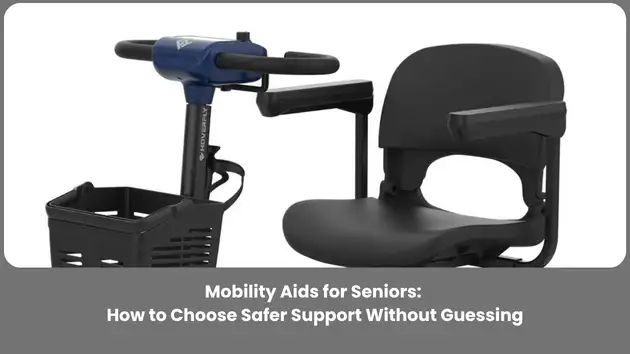
For outdoor errands and longer daily trips, a stable four-wheel model may feel more secure than a compact three-wheel scooter. Families comparing options can look at seat comfort, turning radius, battery range, suspension, portability, lighting, and weight capacity. The Hoverfly T402 electric 4-wheel mobility scooter is an example of the kind of scooter category many families consider when they want more stability for everyday outdoor use.
Do Not Forget the Home Itself
Mobility is not only about walking devices. Many falls happen during transitions: getting out of bed, standing from a chair, stepping over a tub wall, or turning in a tight bathroom. Grab bars, raised toilet seats, shower chairs, bed rails, transfer poles, threshold ramps, and lift chairs can make those moments less risky.
Stairs deserve special attention. If stairs are painful, exhausting, or avoided entirely, the family should consider whether a stairlift, ramp, or first-floor living plan is safer than hoping the problem improves on its own. The goal is not to fill the house with equipment. The goal is to remove the few obstacles that quietly control the day.
Fit, Training, and Maintenance Matter
A mobility aid only helps when it is fitted and used correctly. A device that is too tall, too low, too heavy, or too hard to brake can create new risks. When possible, ask a physician, physical therapist, occupational therapist, or mobility specialist to review the choice. They can help match the device to gait, strength, balance, and home layout.
Maintenance is simple but important. Check cane tips, walker glides, wheel locks, brake cables, loose bolts, battery charge, and tire condition. Daily-use equipment should be inspected often because small failures usually show up first as wobbling, slipping, or hesitation.
A Simple Way to Decide
If the concern is mild unsteadiness, start with a cane. If the concern is leaning, fatigue, or near-falls, compare walkers and rollators. If the concern is distance, consider a mobility scooter. If the concern is bathing, standing, stairs, or transfers, focus on home safety aids first. If more than one problem is happening at once, get an assessment before spending money.
Families do not have to solve everything in one purchase. Start with the movement that feels most unsafe, fix that first, and watch how daily confidence changes. For broader options and support, visit Hoverfly and compare mobility solutions with the person, the problem, and the home in mind.